
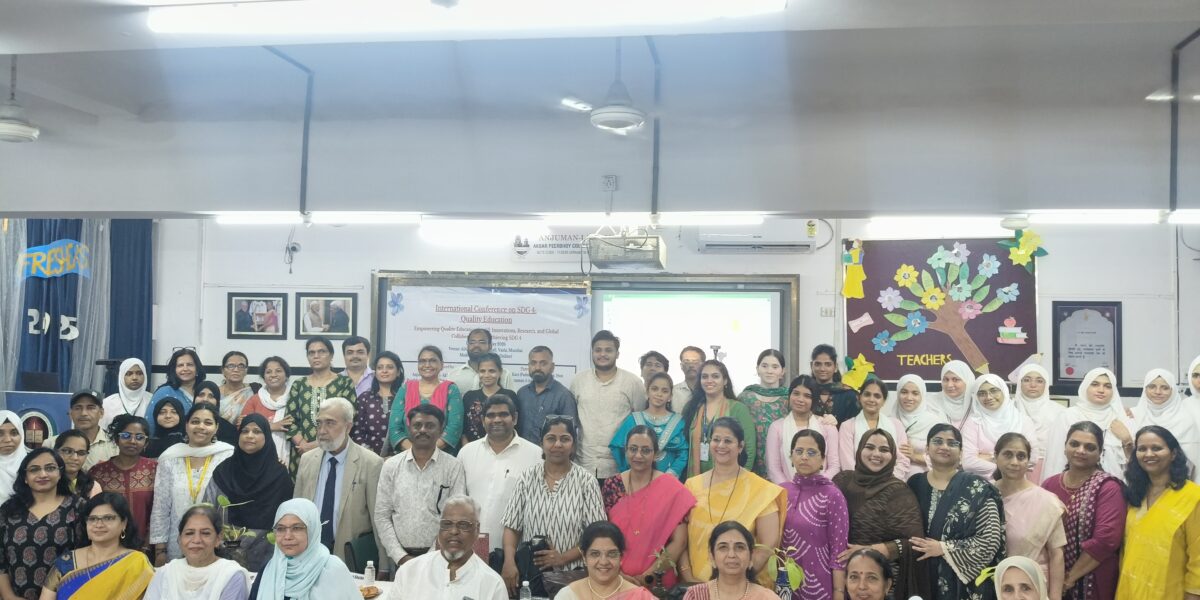
The International Conference on SDG 4: Quality Education on the theme “Empowering Quality Education for All: Innovations, Research, and Global Collaborations for Achieving SDG 4” was successfully organized on 7th & 8th May 2026 at the AIAPCE Seminar Hall, Vashi, Mumbai, in hybrid mode (offline and online) with high technology provision. The conference was jointly organized under the cluster by Anjuman-I-Islam’s Akbar Peerbhoy College of Education in collaboration with H.B. B.Ed. College and M.C.T College of Education and Research.45 papers received from all over the country and beyond the borders of India.
The International Conference was organised under the leadership of distinguished patrons Dr. Zahir I. Kazi, Hon. President of Anjuman-I-Islam; Shri Haribansh Singh, Hon. President of Sainath Education Trust and Mr. Amit V. Deshmukh. Patrons provided strategic advice on themes, keynote speakers, and long-term goals, ensuring the conference aligns with global educational priorities.
Dr Raimo Salo, OULU University, Teacher Training School, Finland, presented Key note address through a case Study from Finland. Ms Afiya Riyaz Mohammed, SEN Teacher, Greenwood Academics Trust, UK as an expert shared her experiences on inclusion.
Dr Rania Lampou, STEAM Instructor and Researcher, Greek Ministry of Education, Religious affairs and Sports as an expert she has enlightened through a topic “Aligning Education with SDG: 4. Mr Shohab Rais, Hon. Joint Secretary, Anjuman I Islam, delivered an inspiring and thought – provoking presidential address.
Mr. Iqbal Kaware, CDC Member, AIAPCE, motivated and encouraged. Dr Ashwini Karwande, Head, Department of Education, University of Mumbai, as a Chief Guest added great value to the conference through Valedictory address.
The conference highlighted several significant objectives, including empowering educators across disciplines with practical strategies for inclusive and innovative teaching, integrating SDG 4 principles into curricula, strengthening leadership capacities in educational institutions, and promoting sustainable lifelong learning ecosystems. Participants actively engaged in scholarly discussions related to sub-themes such as international collaboration in education, teachers as drivers of educational innovation, strategic leadership for educational excellence, and the integration of SDG 4 into multidisciplinary curricula.
Research scholars, teacher educators, school teachers, principals, and future teachers participated enthusiastically in the conference. The hybrid format enabled broader national and international participation, fostering meaningful academic exchange and professional networking.
The event reaffirmed the commitment of teacher education institutions toward achieving SDG :4 by fostering academic excellence, inclusive pedagogy, interdisciplinary collaboration, and sustainable professional development. The conference concluded with a strong resolve to continue collaborative efforts in advancing quality education and creating transformative educational ecosystems for future generations.
The conference proved to be an intellectually enriching and impactful initiative, contributing meaningfully to the discourse on quality education and sustainable development at both national and international levels. And set an example of good collaborative work.